

If you're looking for a deeper explanation of why baggy snow pants dominate freestyle riding, start here:
→ Why Freestyle Skiers Prefer Baggy Snow Pants
Baggy snowboard pants are snow pants cut with extra room.
That extra room isn’t for style. It’s there so you can bend your knees fully, wear base layers without pressure, and sit in the snow without the fabric pulling tight across your legs.
On cold or wet days, small differences in fit become noticeable. A tighter cut can feel restrictive after hours on the mountain. A relaxed cut leaves space to move.
That’s the practical reason baggy snowboard pants still exist.
What the Fit Actually Changes
A relaxed fit affects three things:
1. Movement
More space around the knees and hips means less resistance when skating, hiking features, or riding in a low stance.
2. Layering
Cold mornings often require thermal layers. Extra room allows thicker base layers without compressing insulation.
3. Comfort When Seated
Snowboarders spend time sitting—strapping in, adjusting bindings, waiting at the top. A looser cut reduces tension across the thighs when seated on snow.
The difference is subtle at first. It becomes clear by the end of the day.
10K vs 15K Waterproofing — When It Matters
Waterproof ratings measure how much water pressure fabric can resist before leaking.
10K waterproofing
Works well for light to moderate snowfall and typical resort conditions.
15K waterproofing
Performs better in heavy snowfall, wet snow, or when you sit on snow frequently.
Breathability ratings describe how well moisture from sweat can escape. If you ride actively or hike, ventilation becomes important.
Higher numbers are useful only if conditions demand them. Dry climates do not always require higher ratings.
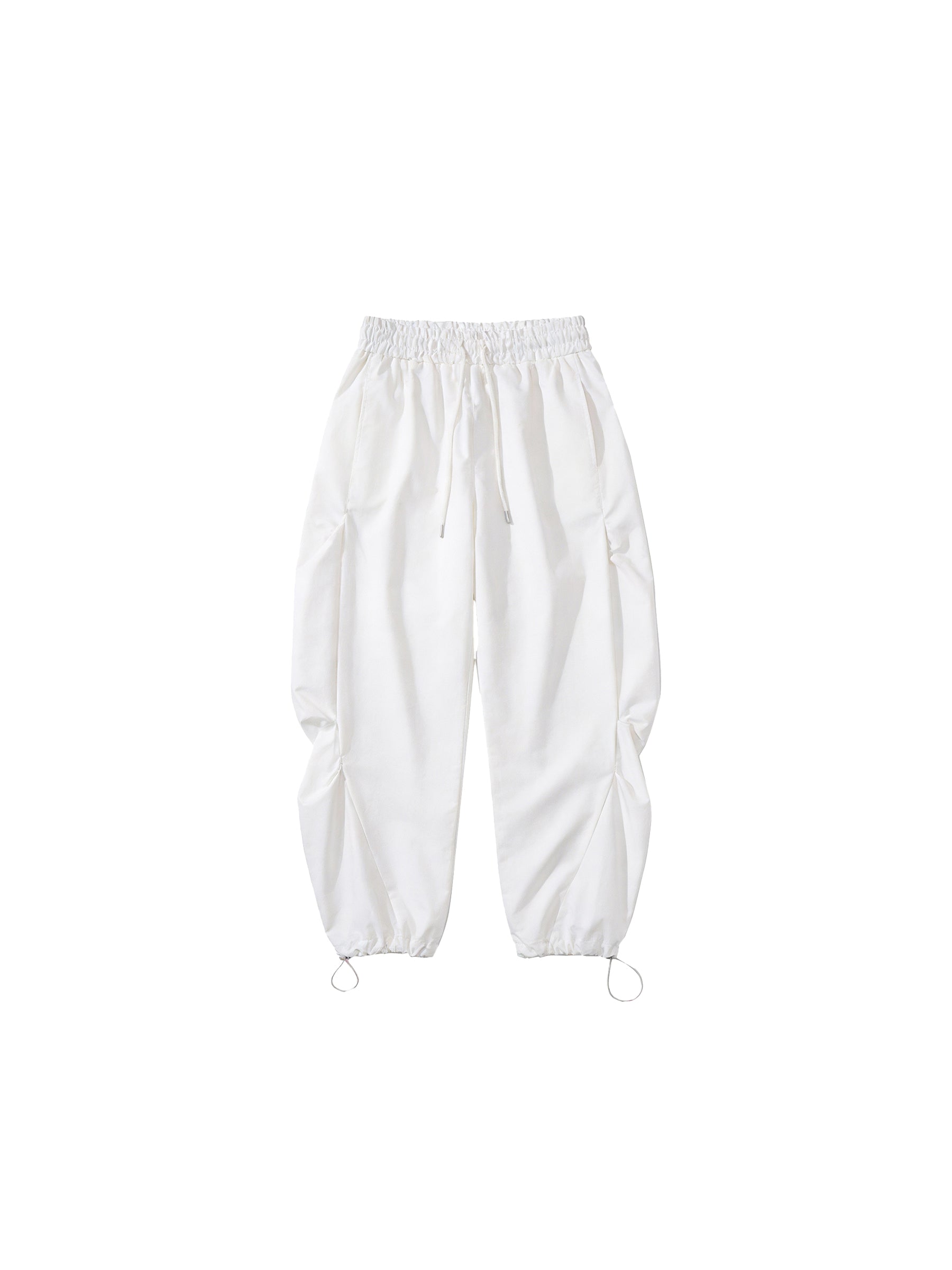
3-Layer Construction, Explained Simply
Three-layer (3L) pants bond the outer fabric, waterproof membrane, and inner lining into one structure.
This reduces fabric shifting and improves durability over time. It also helps the pants dry faster after exposure to snow.
The 3L Baggy Snow Pants use 15K waterproofing with fully taped seams. Inner thigh vents allow heat to escape during active riding, and adjustable cuffs help keep snow from entering at the boot.
The goal is steady protection, not extra weight.
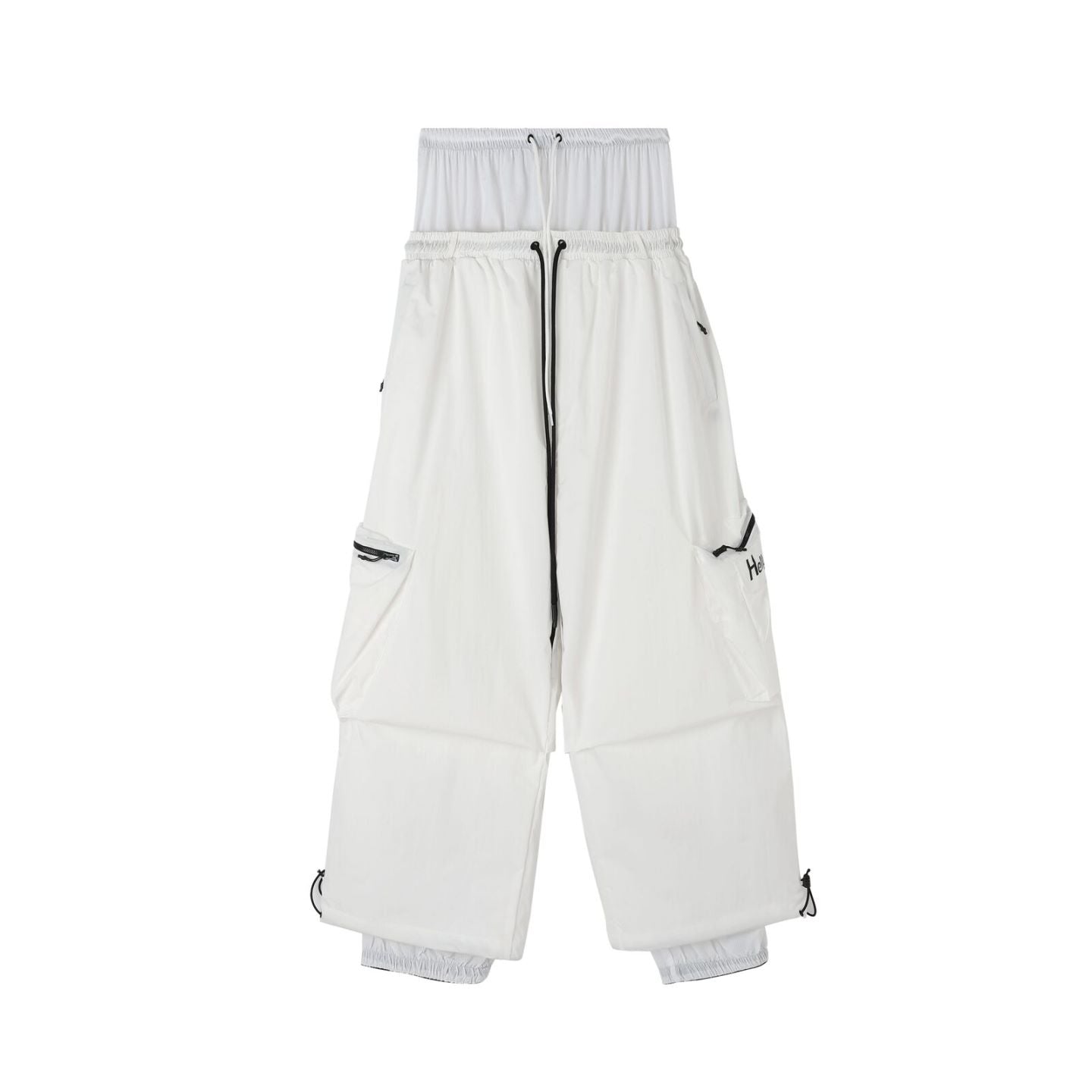
Utility Without Excess
Pockets and adjustments should solve real problems.
The Utility Style Baggy Snow Pants provide 10K waterproof protection with critically taped seams. Cargo pockets are placed high enough to access while wearing gloves. The elastic waist adjuster allows small fit changes over base layers.
For most resort days, this level of protection is sufficient.
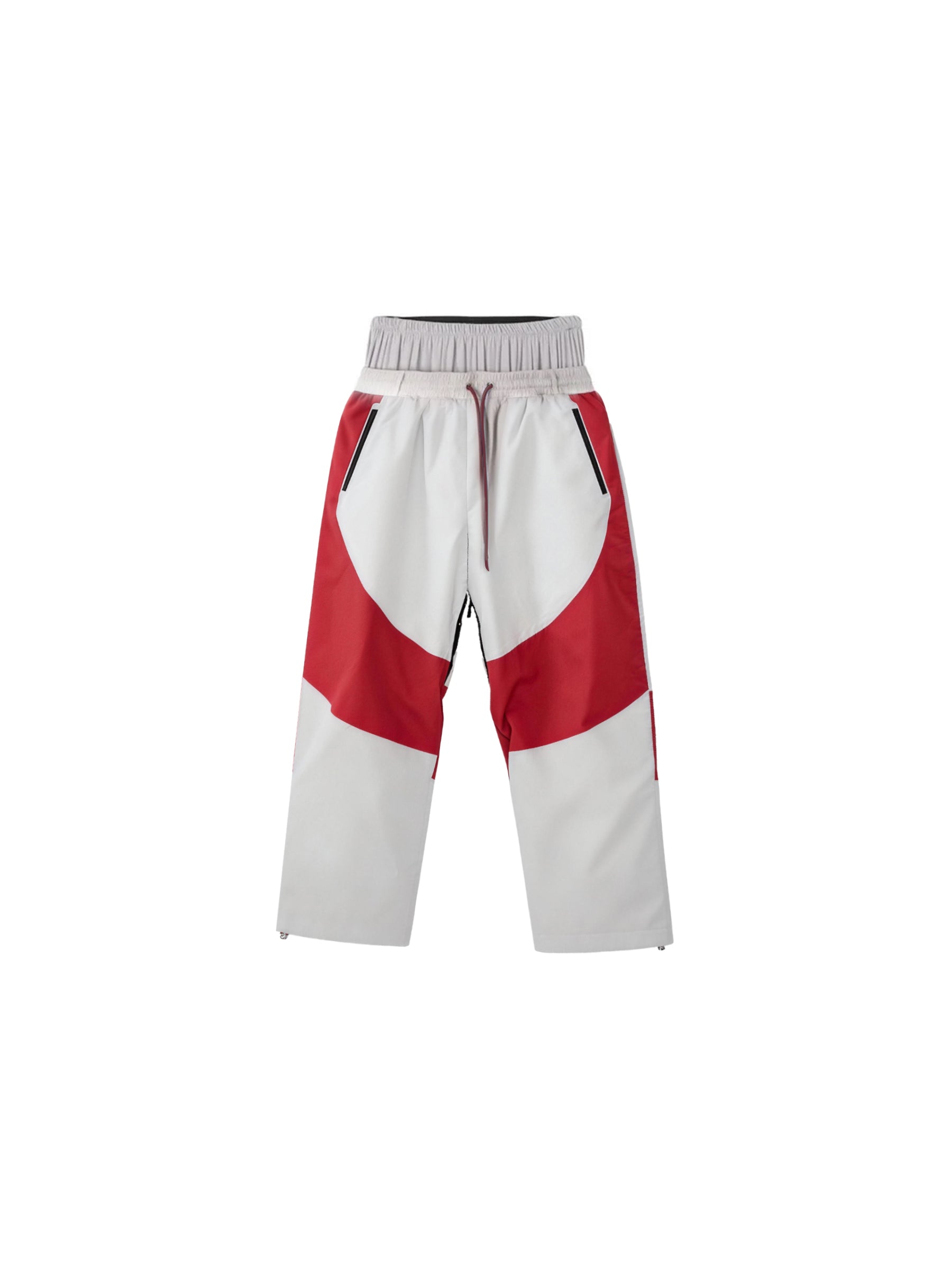
Added Warmth for Colder Days
When temperatures drop, insulation becomes more important than fit alone.
The Grey Spliced with Red Baggy Snowboard Pants combine 15K waterproof protection with a fleece-lined interior and a graphene-backed inner layer to retain warmth.
Snow gaiters and adjustable cuffs reduce snow entry during deeper conditions.
Warmth should feel stable, not bulky.
Baggy vs Slim — A Practical Difference
Slim snowboard pants sit closer to the body. They can feel lighter and less loose in motion.
Baggy snowboard pants allow more air circulation and easier layering. They reduce pressure at the knees and hips during repeated movement.
Neither option is universally better. The choice depends on climate, layering preference, and personal comfort.
Common Questions
Are baggy snowboard pants warmer?
The fit itself does not create warmth. Insulation and layering determine warmth. A relaxed fit allows thicker layers, which can increase overall thermal comfort.
Is 15K waterproofing necessary?
If you ride in wet snow, frequent storms, or sit on snow often, 15K offers stronger protection. In drier regions, 10K is often enough.
Are baggy snowboard pants only about style?
No. The relaxed cut developed because it allows movement and layering. Style associations came later.
Final Consideration
Snow conditions change. Temperatures shift. Riding styles vary.
Baggy snowboard pants remain relevant because they solve practical problems: movement, layering, and comfort in cold environments.
When those needs are met, the design speaks quietly for itself.
Still wondering why baggy snow pants have become the go-to choice for freestyle riders?
→ Read the full breakdown: Why Freestyle Skiers Prefer Baggy Snow Pants